The Historian in the Garden
  • Home
  • About
  • C.V.
  • Contact

Wha'd life be without homegrown tomatoes...?

9/21/2016

 
"Only two things money can't buy
That's true love and homegrown tomatoes !"
(Do watch the whole thing; it's 2:30 of pure joy and you will hum it while reading the rest of this post)

If I's to change this life that I lead, 
​                I'd be Johnny tomato seed...

​My partner is a tomato fiend—tomatoes of any form, in any dish, anytime is AOK with him. In contrast, I am only tomato-tolerant most of the year when our only options are cardboard red spheres raised in greenhouses or canned red gunk coming from our local chain grocery store. However, all that changes in the summer. The moment I get to grab a sun-warm, crimson globe of juicy sweet flavor off that vine, I’m hooked until the home-grown tomatoes are all gone. Further impetus to our household’s tomato-love was the recent acquisition of a pressure canner as a wedding gift (from my in-laws, who know us very well!). We were determined to have not just some tomatoes, but MANY, MANY tomatoes this summer, and to preserve them to bring some summery warmth to our winters.

Plant 'em in the spring; eat 'em in the summer,
All winter without 'em's a culinary bummer

We planned for a grand total of 25 tomato plants and wound up with 27. Per our garden plan, only 14 of those are in the Victory Garden. We have 9 more off the back porch, two that were in pots and later transplanted out, and accumulated two accidentals. This was a lot of tomatoes. We’ve canned over 100 lbs already and dehydrated probably close to 50 pounds more. We’ve eaten roasted tomato soup, gazpacho of all colors and sorts, mostly-tomato-tabouli, many variations on tomato pasta sauce,  burst-tomato galette, stuffed tomatoes (from Moosewood), salsa of so many varieties, fried green tomatoes, and just plain sliced and cubed tomatoes on top of most of our meals at this point.

I know what this country needs: 
Homegrown tomatoes in every yard you see!

PictureWW1 gardeners grew tomatoes too!
Just as they are in back-yard gardens today, tomato plants were the indisputable hallmark of Victory Gardening in World War II. Our pre-occupation with tomatoes is only in keeping with my historical experiment, in other words. Every single Victory Garden plan I have come across includes tomatoes, and every instructional guide lists the vegetable among recommended plants for even the most tiny backyard plot.  Even if you didn't have a patch of land or a plot, Americans still found ways to grow tomatoes. Victory gardener Elizabeth Guthrie remembered walking down New York City streets and seeing "every window box with a tomato plant in it." [25 Years of Community Gardening. (New York: American Community Gardening Association, 2005).] Tomato recipes exploded across the pages of wartime cookbooks to use up the harvest -- including entries in the 'Desserts' section such as "Tomato Spice Cake" !!! (I have tentative plans to bake this; rest assured, I'll update with results.)  Meanwhile, housewives across America canned more tomatoes than I'm sure I could ever fathom.
​
As a final illustration of the importance of tomatoes in war, please read one of my favorite historical finds EVER, straight from the Wall Street Journal at the height of the war:

'My one and only,' He cried passionately, 'come to me. Shake off the hackles that are holding you dormant, arise and let me take you in my arms. Let me display you in all your pristine glory to envious friends and passersby. Raise your head to the heavens and your face to mine, and by so doing make me the happiest, proudest, and most fortunate man in all the world. Arise, my love, arise.'
So saying, the amateur horticulturist hopefully sprinkled a little more water on the single tomato plant in his 'Victory' garden.
           -“PEPPER and Salt,” Wall Street Journal, July 27, 1942. 

I forget all about the sweatin' & diggin'
                       Everytime I go out and pick me a big one

But that's not quite true. I remember a lot of the sweating and digging. I remember the struggles. And, as a historian, I naturally feel it's important to document those struggles filled with sweat so we can improve upon this for next year! Therefore, a list of our problems:

Lack of Variety
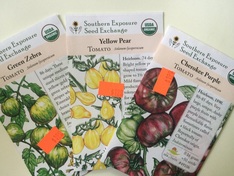
PictureYay Southern Exposure Seed Exchange!
We only had three types of tomatoes, none very different from each other. We grew heirloom Brandywine (it only seemed patriotic, living as close to the Brandywine as we do), ‘Big Beef’ varietals that were gifted to us as starts by our amazing landlord, and then Fox cherry tomatoes. All three were slicers, all three were red, round, and of similar size except the cherry tomatoes. Turns out, you can get a little bit sick of home-grown tomatoes.
 
Solution:
Next year, I’m growing many different types of tomatoes for different purposes! Green Zebras and Purple Cherokees for color, flavor, and novelty, golden pear cherries for our small ones, and then only filling in the gaps with generic slicers like Brandywine and Big Beef.

Lack of Support
Picture
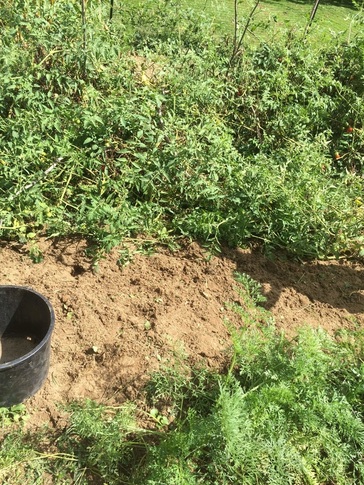
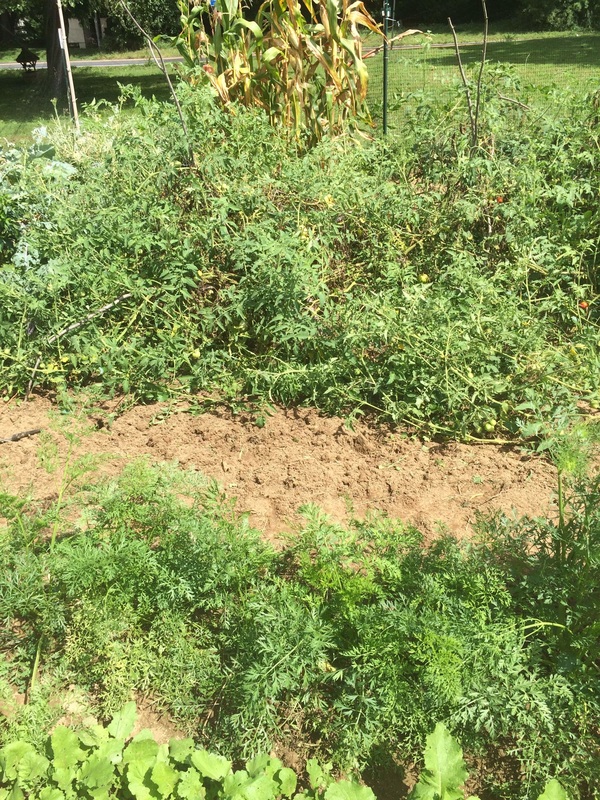
Not, not emotional support; the physical kind that should be easy and straightforward. We inherited some tomato cages this year. I had never used such contraptions before, but they appeared to be period-appropriate (can I get a source on this???), popular and low-effort to set up; plop it on and call it a season, right? No. Seeing the cages start to buckle early on, we supplemented with stakes inventively foraged from the woods and plunged into the ground by hand. These collapsed together with the cages as the tomatoes continued to grow past all reasonable expectation of mass and quantity. Our hopeful tomato forest turned into a sprawling tomato jungle. This is a problem because tomatoes on the ground rot more easily and catch more diseases, less air flow decreases pollination and also increases disease, it is incredibly hard to sort through the limbs to access and pick tomatoes without bending/breaking stems and finally, they swallowed up nearby rows of vegetables in their sprawl and were very space inefficient.

Solution:
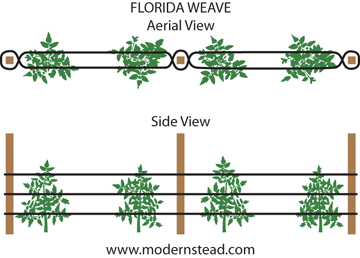
Next year I want to stake out our tomatoes the way I was taught for big rows: we’re constructing a Florida weave, or else.
This is efficient in terms of labor since no tomatoes are handled individually, orderly in appearance, and incredibly sturdy, since it relies on metal stakes pounded into the ground. It also works only in rows; this is the most pro-row you will ever see me.

Bushiness
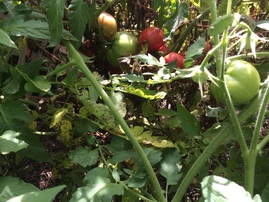
PictureJUNGLE.
​One of the traditional ways of keeping any plant from putting its primary efforts into growing branches and to make it direct its energy toward producing fruit is pruning. When done to tomato plants, this is called ‘suckering’ – nipping the new baby branches that start to grow between leaves and main stems along the plant. We started strong with suckering, but the timing of our wedding in the middle of June meant that when we returned it felt like all our efforts had been for naught. Despite early, conscientious suckering, the tomato plants had each grown too many limbs for us to keep track of, each too big for us to prune without creating a large wound and possibility for infection. This probably contributed to the tomato jungle collapse effect.
 
Solution:
Don’t get married at the start of the growing season next year – or leave town for a week-and-a-half for any other reasons either, I guess?  

I've been out to eat and that's for sure
            But it's nothin' a homegrown tomato won't cure

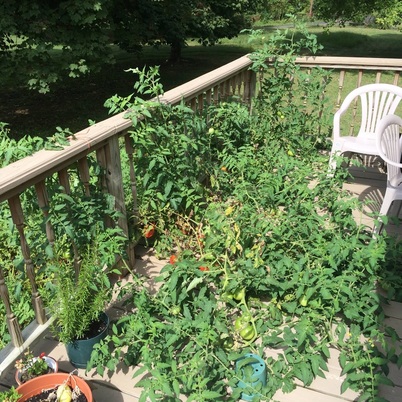
For all our troubles with tomatoes, both good problems (abundance) and worse problems (tomato jungle), we did have a success that, to me, stands out above and beyond the rest. Behold our great technological innovation: self-delivering tomatoes! Not only did we not go out to eat ANY tomato dishes this summer, but sometimes we didn't have to even go outside the porch!
Picture

When I die don't bury me
In a box in a cemetery
Out in the garden would be much better
I could be pushin' up homegrown tomatoes!

Weekend Reading . . .

9/14/2016

 
Picture
If you haven't already, you should definitely be checking this out: The Graduate Association of Food Studies has come out with their Fall 2016 journal issue! The contents are amazing, written by intelligent and enthusiastic up-and-coming scholars across many fields and disciplines who study food. I was lucky enough to have joined onto this exciting organization close to its inception; through it, I’ve met some truly incredible individuals who inspire and inform my work. If you work in anything related to food, I cannot more highly recommend joining this supportive community by becoming a formal member. 
Visit https://gradfoodstudies.org for the whole issue!

Picture

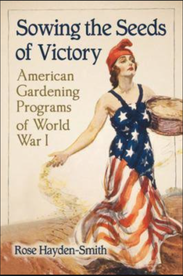
Selfishly, this issue is extra exciting because it’s a new opportunity to see my name in print, and my writing in publication. Even more exciting, I was able to help promote a thoughtful book that I found intellectually stimulating, historically well-researched, and extremely relevant to food conversations in twenty-first century America. In short, I authored a review of Rose Hayden-Smith’s Sowing the Seeds of Victory: American Gardening Programs of World War I (Jefferson, NC: McFarland & Co., 2014). Read it yourself here: Review of Hayden-Smith, Sowing the Seeds of Victory.

Just coincidentally, as I was looking for the cover-image of the book for this blogpost, I saw that around the same time I was first submitting my review to GAFS, my colleague Chris Deutch also reviewed it, on H-Net (cross-posted on H-Environment and H-War). Read his review here. We largely concur -- how validating!

Less selfishly again, you should definitely be sure to read my esteemed peer Darcy Mullen's article entitled, "Cartographic Communities of Locavores: Local Ideographs & Spatial Rhetoric". She takes a compelling look at what local food movements *mean* today -- and I mean that in the semantic, rhetorical, ideological senses; what does 'local' denote and connote? How can ideographic theory help bring clarity to such socio-spatial rhetoric?  
To read more of her work in her blog on food, and books about food, check out http://storiesofsoil.blogspot.com.​
Picture
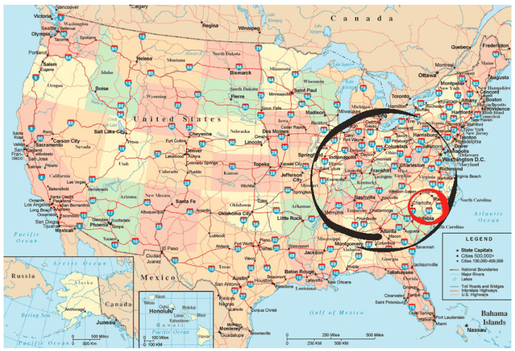
Image from Mullen's article. You know you want to read this.

Autistic Students Fail Because of Institutions, Not Professors

9/13/2016


Nota Bene:

This is a personal issue for me, absolutely. On the one hand, I am aiming to enter the ranks of the professoriate, and care deeply about both pedagogy and the plight of university teaching staff  in a professional capacity. On the other hand, I have the deeply personal experience of being older sister to a wonderful, amazing, talented young man who is on the spectrum. He has received his Associates degree from a local branch of a state college. However, it is clear to everyone who has ever met him -- or heard his highly technical music, which has made its way onto two internationally syndicated television shows! -- that he is fully capable of the intellectual task of completing a bachelor's degree. One of my parents has also been deeply involved in multiple aspects of higher education (though never as professor, working closely with professors) at two different institutions. To this, I also add my own years at Lawrence University and then the University of Delaware. It is this body of experience and evidence that informs my thoughts here.

Reflecting on Inside Higher Ed's article, "Students on the Spectrum"

This morning, I woke up and read my daily digest of InsideHigherEd articles, to help me keep abreast of national events shaping academia. I don't always agree with the opinion pieces, but I read them anyway; of course I clicked through an article about autism and post-secondary education. The authors, Elizabeth Finnegan and Margaret Finnegan, open with some troubling and undoubtedly true statistics, and come to a sound conclusion based on them:
A 2015 Autism Speaks report found that only 30 percent of high school graduates with autism ever attend a two- or four-year college, and those that do fare poorly. Research suggests that 80 percent of them never graduate. Furthermore, only 32 percent of high school graduates with autism find paying work within two years of graduating high school. This need not be. Half of all individuals with autism have average or above-average intelligence. They can do the work. The problem is not the students. It’s the colleges. [....] Together, we have seen the many ways that colleges fail students with autism.
My fist was raised in the air! Yes!
​We are talking about making Higher Ed more accessible, not for those who cannot do the work or maintain the intellectual standards of the institution, but for those who ​can and are not given the institutional support to do so. The authors went on to make another slam-dunk point:"if autism is indeed a social disability, then denying the social needs of autistic students is inherently unreasonable". Carry on with the structural critique, I cried! Lay it on me, and I will broadcast your message from the rooftops! 

As the article went on though, something went deeply wrong. Perhaps you can spot a trend:
When students felt their social needs were met -- in particular when faculty members proved willing to modify their teaching style -- students had much more positive experiences. But American professors are not required to modify their teaching style for disabled students
[....]
It would help if faculty members understood how autism affects learning. But professors are busy [...] professional development seminars are often poorly attended, especially those focused on helping students with special needs. [...]Even when given the opportunity to learn more about the needs of disabled students, professors turn those choices down.


​What happened to institutional critique? Then again, why delve deep into causes of underfunding, problems of administrative support, societal stigma around neurodiverse individuals, or what is making the professors so very busy, when you can simply lay the lion's share of the blame and responsibility at the professors' feet???

​Don't worry: professors can present work, research in archives around the world, publish books, articles and materials meant for public audiences, mentor higher-level students, teach introductory classes AND spend significant amount time finely honing pedagogical skills! [/s]

All these things are not possible at once. Furthermore, from a shallow political perspective, dumping on faculty like this is just justification for more budget cuts. What we need -- and will not get by simply denigrating university teaching staff-- is reform and justice in the academic labor market. This would actually help faculty to help students.

To Be Fair...

I also know that terrible professors can be a big portion of the problem and definitely exist. The article details the experience of one its authors interacting with a faculty member: 
Elizabeth, for example, struggles with understanding if professors are being sarcastic or rhetorical. Uncertain, she often responds too much or too little. When one professor expressed frustration at her eager hand raising, she asked privately if he would signal her when he wasn’t being serious or didn’t require a response. “No,” he said. “I don’t need to change my teaching for you, and you need to learn sarcasm.”
 You cannot just ask someone on the spectrum to 'learn sarcasm' on top of your course load; this is truly atrocious! Yet,I believe this story whole-heartedly. I've heard stories of the same and worse levels of appalling callousness; I have seen them unfold. In some cases, the adjuncts have given up on ever getting tenure, never were trained to teach during their masters or doctoral degrees, and/or don’t get paid enough to care between their commutes and second (and third and fourth) jobs. The tenured professors just don’t have to care and/or are bitter over being stuck at a community college instead of an R1; some should have retired years ago. Some of the tenured professors who aimed for R1 also never learned how to teach, spending all their time on research. I'm not saying all university instructors are infallible, above critique, or even good at teaching. But do these anecdotes represent a majority, or even a statistically significant percentage of professors??

Furthermore, I also hold pedagogy important. Yes, I feel personal responsibility for the well-being of students within my classroom, and have made a point of personally seeking out all the tools available to me to make myself a better, more inclusive and welcoming instructor. I would be one of the three faculty attending those workshops on dealing with disabilities in the classroom; UD offered an excellent opportunity to do so just last year,


Why do I disagree so vehemently then, if I agree that faculty can be major causes of failure for autistic children -- and yes, also major parts of the solution???

​Because this article stops at blaming professors.

What if I told you the reason I couldn't attend the disabilities in the classroom workshop last academic year was because I was trying to grade 87 mid-term exams in a single weekend, while also finishing another draft of my dissertation prospectus?

The problem is the university teaching labor system, and this article doesn’t address or even acknowledge the underlying causes at play, of which overworked and under-dedicated university instructors are often mere symptoms.  How about the fact that 70% of university teaching staff across the United States today fall under the classification of non-tenure-track-faculty??? The vast majority of those are adjuncts; they are underpaid and overworked. Many are not even offered offices, let alone professional development opportunities. And how can they attend these unpaid 'opportunities' when over a quarter rely on food stamps to make ends meet, and many more still fall below minimum wage in their annual earnings.  There are myriad articles detailing the crisis of labor in higher education, and how this issue lies at the very heart of the corporatization of the university, budget crises, disappointing student learning outcomes, and more. Educate yo'self!
But at least not all the responsibility for fixing the problem falls on faculty; the authors move away from faculty alone when they talk about solutions. They point out just how helpful social support from other students can be, and how meaningful:
For Elizabeth, the greatest support has often come from students who have chosen to act as social interpreters. A whispered word or two is often all she needs to better and more appropriately engage with her curriculum. Colleges like California State University at Fullerton already have mentorship programs that pair neurotypical and neuroatypical classmates. We recommend expanding such programs so that peer mentors -- perhaps those offered the coveted privilege of priority registration -- work side by side with autistic students in the classroom.
I agree; such programs are wonderful, and peer support can be fantastic. However, this also side-steps the fact that universities are broken in their very bones. The whole problem cannot lie with university instructors, and the whole solution cannot be instructors teamed with student aids. The worst thing we can do for all students - neurotypical and neurodiverse alike -  is to shallowly malign instructors for systemic problems of which their pedagogies are effects, not causes. This article is yet another that side-steps the deep ​​crises of higher ed to focus on bad-mouthing professors, the face of the university, and offer glib, no-reform-needed solutions. But faculty and students alike deserve better. We deserve more. We need to demand more from our institutions to serve the needs of all. 

The Row Verdict

9/11/2016


Pre-Trial Context:

​"Make the rows straight. A good garden line is as necessary as any garden tool.”
-John A. Andrew, Kitchen Garden Guide (Philadelphia, Pa: Pennsylvania Horticultural Society, 1942), 
​As discussed in an earlier post, it became clear that I was going to have to garden in rows instead of beds or patches for a number of reasons. Most importantly, World War II garden plans are almost exclusively laid out in rows. Thus, it wouldn’t be representative for purposes of my experiment to pursue bed gardening. More minor considerations included the hypothetical possibility of renting machinery from a neighbor that would work best in rows for cultivation throughout the season (this, too, is a common piece of advice). 
Picture
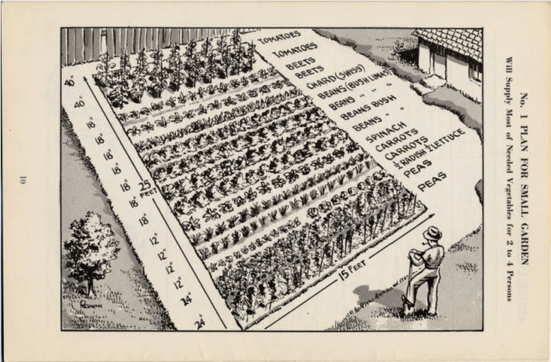
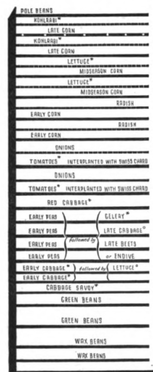
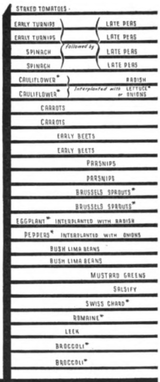
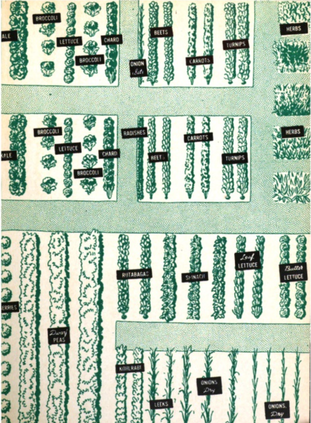
The plan selected, for reference (sans all double rows except for beans and tomatoes).

The Case For Rows

Picture
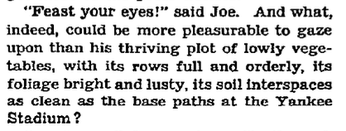
I expected the upsides to row gardening to be clear; World War II materials claimed:
  • An orderly, tidy, leisurely, and all-American aesthetic. I'll let the quote to the right speak for itself. [Leonard Harman Robbins, “15,000,000 Victory Gardens,” New York Times Magazine, August 23, 1942.]

PictureRows from Putnam &Cosper
  • Easy weeding and maintenance, they said. Over and over again I read variations on the sentiment:  "Straight Rows Aid Cultivation" [Victor H Ries and Ohio Fuel Gas Company. Home Service Dept, Planning the Victory Garden. (Columbus, Ohio. Home Service Department, Ohio Fuel Gas Company, 1944) 5]. When your garden plants are in rows, by necessity your weeds will grow in between them, also in rows, and are therefore easier to identify, and eliminate, moving down the row either pulling my hand or using a cultivator tool. Furthermore, one should always pursue the fewest, longest rows to maximize gains here: "One long row instead of two short ones saves labor." [Joseph H. Boyd and Victor H Ries, Garden For Victory, Ohio, Bulletin 232 (Columbus, Ohio: Agricultural Extension Service, Ohio State University, 1943), 

  • Making the most of the space you’ve set aside for gardening: good row garden layouts help the gardener "plan to make every square foot of your available land account for itself in the greatest number of bone and tissue building elements," wrote J. G. Alexander (“Your Victory Vitamin Garden,” Hygeia, June 1943.) Close rows = more product per ft., according to all the World War II experts.

  • Rows lend themselves to more variety in a small garden than over-large patches of any given crop. You can even split rows half-way down, as we did with the radish/lettuce row. In the middle of explaining why one should follow their row plan, Sunset Magazine's Vegetable Garden Guide explains:  (1942, Full view)

Picture
PictureIbid.
However, I also had some early hypotheses informed by 21st century science and experience/intuition respectively:
  • Fewer pests because less concentrations of any one plant over a wide and long area. If monocultures breed pest specialization and increase populations, more plant diversity decreases pest propagation -- and, at least on the cross-ways axis, rows create much diversity. Essentially, if intercropping two species in a field is putting two rows of different plants side by side, a row garden with one row of each plant would be considered maximum intercropping if it were happening over acres and acres . . . so we should have minimum pest problems, right???

  • Ease of access for harvesting even small beans – no reaching across over-wide garden beds. (Even four feet can be way too wide if you are under 6 feet tall, as I have discovered in past garden plots.) With bed layouts, if you lean on the soil, you are inevitably compressing the roots or possibly squashing plants. Rows seemed initially like they could fix this problem; although there weren't any rows, there would be logical foot-places between the rows that would facilitate access, or thus ran my very early hopes. 

The Verdict on the Case

PictureHaving ripped out the overgrown beans, the tomatoes sprawl where beets and chard were meant to thrive...
​What actually happened: none of those things. Visual and horticultural chaos ensued. I never knew where was safe to put my foot so harvesting was an excruciating game of twister. The weeds lurked in all the hardest to reach places, and we still had colossal bug infestations! I’m convinced that the difficulty getting between the vegetable rows for harvesting and weeding reduced our total harvest as well, putting a dent in any gains in productivity made by putting so many vegetables so close together with no paths.
 
In all fairness, it might not be that rows are inherently flawed; it could simply be that the plan I chose to follow was bupkis in terms of spacing. Certain rows were COMPLETELY overshadowed by their neighbors. The beans in particular just took over all the adjacent areas to their own space and completely eliminated the path between them; you couldn’t tell they were in two rows within two weeks of sprouting! The chard didn't stand a chance -- the bugs that seemed to originate with the beans also migrated to eating chard as the season went on, so the diversity failed to save them!

[NOTA BENE Let it not be thought that I am denying any human error at play. Perhaps the beets might have stood a chance of surviving on their own if only we had chosen a more sturdy staking method than wire tomato cages. It became clear the cages were incapable of supporting the great bulk of weight presented by all the fruit, and the tomato plants swallowed the beets alive as they spread out horizontally as the summer went on . . . . The plan likely assumed we would be competent at staking our tomatoes so they could grow in a more, erm, vertical direction.]

Nonetheless, perhaps the unknown author of my garden plan should have followed Jean-Marie Putnam and Lloyd C. Cosper when they advised gardeners of 1942 to invest in some technology to aid with planting:

​"Garden-o-meters show the proper distance apart the rows should be for each type of plant." – pg 52, Gardens for Victory, First (New York, N.Y.: Harcourt, Brace, and Company, 1942).
[This is most certainly NOT what Putnam and Cosper were referring to, but this was the first google image result for "gardenometer" .... however, when unable to find any "garden-o-meters" online, my first thought was not dissimilar. I immediately went to an article I had just read on singularityhub.com entitled: "FarmBot Will Grow Your Food For You; Just Press Go"   . . . god, I really should write a post about farming-futurism sometime . . . ]
Picture
(Credit: Alice Thompson, click image for link.)

The Final Straw (no, not a mulching joke)

​The problems of succession-planting with rows was entirely unanticipated, although perfectly obvious in hindsight, and has permanently soured me on rows. Read more in the 'third shift' post coming soon!

A Summer at Hagley: Archives, Authors, and Allergies

9/7/2016


A Recap of My 'Day Job'

PictureHow many archives gigs include a desk with a skylight?! Lucky indeed.
​
​           This summer, I was lucky enough to obtain an internship working in the Manuscript and Archives Department of the Hagley Museum and Library; I needed to find something local, convenient, flexible, and paid, given my obligations to my garden, my dissertation, and my wedding! I was beyond fortunate to work with the delightful staff in the gorgeous Soda House, taking materials from their original boxes as given by the donors, organizing the materials so they are easy for future researchers to access, and rehousing in new folders. I would deaccession duplicates, select materials in need of conservation, and set aside photographs, VHS’s and other materials more appropriate for the Audio-Visual Department to handle. While I had amazing supervisors, support, and guidance, I was given autonomy almost like any other employee. The result was a summer of growth, exploration, skills acquisition, and a surprising love affair with seeing archives from the other side of the reference desk.

Abbreviated List of Materials I Processed (That Researchers Should Know of!)

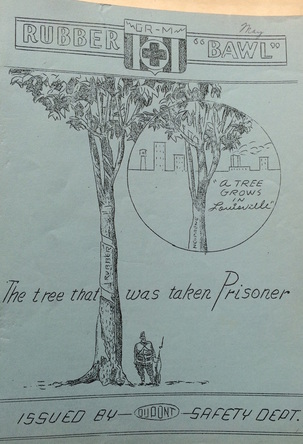
Picture*The Rubber Bawl,* May 1944. Dupont Louisville Works Safety Department. Dupont Performance Elastomers LLC, Collection.
  • Dupont Performance Elastomers LLC, Collection The bulk of this collection is an incredible run of employee news publications from 1943 until 1991 at the Dupont Neoprene plant in Louisville, Kentucky. It was a joy for me to find myself doing accidental research on factory conditions in World War II, as well as to see the evolution of employee culture, interests, and recreations over the years.
  • Edy Mozzi Papers - When I was cataloging this, I treated it as its own collection with its own accession number. Since I departed, it has been transformed into Series IV of RCA Camden records. This makes much sense in terms of contents, but my finding aid research was much abbreviated: if you are interested in reading my expanded finding aid information for this series, contact me.
  • ​Electrical Power Systems Records - These records were donated to Hagley by Dr. Julie Cohn; some of them came from her father’s work and career. They also formed a small portion of the research that went into her dissertation, soon to be book manuscript: "Biography of a Technology, North America's Power Grid Through the Twentieth Century". (University of Houston, 2013) As that title might suggest, these papers are those of engineers – primarily former Leeds & Northrup Co. employees – who were involved in the technological problems of connecting power grids across the United States in the 1900s.

  • James W. Scarlett Letters - These papers were kindly sent our way by James’ son,  Dr. Timothy Scarlett, a professor at Michigan Technological University’s Industrial Archaeology program. Dr. Scarlett was primarily responsible for organizing, writing up historical/biographical context, and creating an inventory of the materials.
  • Marconi Wireless Telegraph Company of America Engineering Drawings - I wrote a blog post trying to spark public interest in the materials for the Hagley Sarnoff Project blog entitled: "The Titanic Connection." Read there for more about these incredible artifacts.
  • ​William G. Ramsay Family Correspondence - Really interesting set of letters, bulk 1868-1916 from a figure that Hagley already has materials pertaining to. This collection is most interesting for the correspondence to and from female family members of William. Personal favorites included William’s letters to his wife -- and hers to him:
My Dear Heart Willie -
Did you know I did not realize that you were going today to be away till Thursday -- I felt quite pitiful about it for I really did not say Good-Bye at all --at--all-- I have written five letters this evening ...
[William G. Ramsay Family Correspondence, Box 1, Folder 2. Lena to William (18 letters), 1893-1903]
Picture
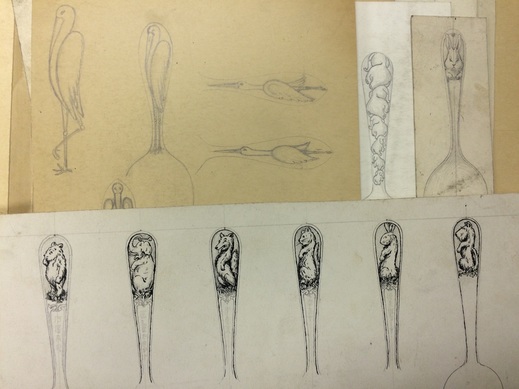
At the very end of my tenure, I assisted Marsha Mills with Lunt Silversmiths Records, accession number 2544. Stay tuned for a full finding aid later this fall, but accept this sneak peek of some children's silver spoon designs!

Take-Aways from My Summer Loft

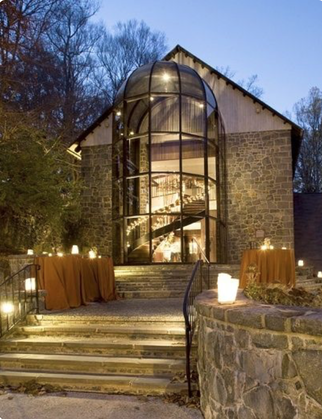
PictureSoda House gussied up for a wedding.
          Archives are FULL of dust and mold that will trigger all your morning summer allergies. Blueprints and simply dirty materials will stain your hands black with dirt if you don’t wash frequently, and sometimes leave an icky residue anyway. Oversized materials can necessitate standing on your feet all day carefully moving huge and delicate sheaves of paper from one table to another. Boxes of paper quickly become very heavy indeed, and moving boxes from shelf to shelf can be a workout in itself, even if you have indeed been doing the occasional pushup in the mornings, as I was. The stacks are freezing to protect the books, and you can feel very silly packing huge, heavy cardigans for work during an excessive heat warning. But to be honest, the worst part about working at Hagley all summer was seeing other people working on the Charles Lamb design collection or original Hagley building blueprints and wishing I could ALSO be helping with those!

          Indeed, for all the back-ache and sneezing, I took great joy in my work this summer. I discovered an unexpected form of intellectual stimulation; the puzzle of looking at raw materials, figuring out what they are, and trying to see all or many possible angles for research within them – not just approaching with my own lenses of food, environment, social history. These materials could all be used for so many different projects, and help to answer so many different questions. While it wasn’t my job to think of them all, it was my job to organize the materials so they could be most easily used for the widest variety of purposes – and easily accessed by researchers from out of town on pressing time-tables. I think I’ll have a lot more empathy going forward whenever I get frustrated with a finding-aid, outraged by a filing scheme, or can’t find what I need in the first half hour within arriving at a new archive. Thanks for all you do, archivists – especially my amazing co-workers from this summer: Lynn Catanese, Lucas Clawson, Clayton Ruminiski, Chris Baer, and Marsha Mills. 

ADDENDUM - MORE HAGLEY

Want to spend more time at Hagley or see what researchers there are up to? Check out any of the following:
  • Stories From the Stacks - researchers on the property talking about their work in audio form!
  • CONFERENCE - MAKING MODERN DISABILITY: HISTORIES OF DISABILITY, DESIGN, AND TECHNOLOGY October 28.
  • Author Talks - hosted in the Soda House, featuring new books based on Hagley archival holdings
  • Research Seminars - scholars present works-in-progress, pre-circulated with RSVP, for comment and discussion.

Weekend Work: The Garden as a Sisyphean Task

9/4/2016


Garden Ideal vs. Garden Reality

PictureFront paper, Sunset’s Vegetable Garden Book. (San Francisco : 1943). HathiTrust Digital Library.

​Dating back to the earliest garden magazines, readers of horticultural lit have been treated to pictures of perfectly trimmed beds, immaculate borders, orderly plantings, tomatoes staked out upright ​and proud, with lines drawn by rulers and nary a leaf out of place. No one publishes pictures of that weedy back corner, the stretch of broccoli completely decimated by pests overnight, the potatoes that were vibrant one day and gone the next, the rows of spinach planted that never came up . . . (Did you know soil temperatures above 75 degrees Fahrenheit can stop certain varieties' germinations? We learned this just recently.)

​
My summer story is a little different than standard depictions of gardens from World War II - or any other era. Just Friday I came across the visuals at left and nearly despaired of my garden. I sighed and went to the internet for a quick break from work, when I stumbled upon a blog post: My Garden Sucks and That's Ok.  That's when I knew what I needed to write about this weekend. Still, one particular World War II quote came to mind as I surveyed the weedy wasteland at the start of some seriously heavy work and weeding:

For even though they have the best of intentions in the beginning, many people permit their own gardens to go to waste through carelessness, neglect, or ignorance.
​-Florence Kerr, “Community and Defense Gardens, Presented at the National Defense Gardening Conference in Washington, D.C.,” December 19, 1941. RG 16 Entry 17 Records of the Office of the Secretary of Agriculture, General Correspondence, 1906-1970. Box 303 (1941) file "Gardens". National Archives at College Park, Maryland.
Picture
My ego couldn't handle a further-out shot, but this is still pretty brutal. And this was after ripping out the horrendous mess of pest ridden over-old beans from the early summer.

My Weekend To-Do List Was Not Modest:

For the Victory Garden alone:
  • Rip out beans (old, eaten by bugs)
  • Replant turnips/parsnips row
  • Continue with setting mouse traps with peanut butter
  • Dump all the seed packets that got wet in the rain and see if any germinate
  • Pest treatment – make homemade spray? Investigate WW2 resources further
  • Decide if moving our little greenhouse to VG plot in winter, if so, where; rest that soil???
                       -NOTE TO SELF definitely call Mike McGrath on this and see if I can get on WHYY's You Bet Your Garden!

Outside the Victory Garden:
  • Rip out back bed weeds, fill in with seeds where zucchinis were, stake lone tomato there
  • Weed & replant sad failed lettuce bed: cabbage back row, middle row arugula, front trim of spinach
  • Start basil, chives in pot.
  • Try again with eucalyptus & thyme cuttings so have indoors this winter
  • Repot cacti, baby orchid, big orchid (need orchid soil though)
  • Make a raised bed and plant garlic STAT. (How much would be a years supply?)
 
PLANS TO EXPLORE FOR NEXT YEAR
  • Put a raised bed in lazarus bed where soil isn't draining well
  • Mulch the shed-stair-corner for winter so we can plant with flowers next year
  • Rain barrel possibility???

Results:

PictureSmartweed (Persicaria macula)- pest or bouquet?
This may not be completely surprising, but we didn't do everything on the to-do list. Tons of weeding was accomplished, some re-planting in the back, lettuce, and Victory Garden beds. Perhaps truly the most impressive outcome of the weekend was the nuclear-red color of my lower back after working outside for many consecutive hours on Saturday in a sports bra. It looks much better, though the sun is down now so pictures can't capture the improvement. 
As is the way of the garden, along the way to accomplishing the things we did, more to-dos emerged: the creation of the bouquet at left, the realization that I could be making smudge sticks out of the mugwort (Artemisia vulgaris), ideas for pollinator-friendly plantings in under-utilized corners, and of course, more ideas for things to research and write about out in the garden. Here's to a week as productive and satisfying at work on the dissertation coming up!

Bonus: Delaware Gardening Resources (Try this at home!)

Because sometimes you still haven't found a Delaware-specific World War II gardening guide, and you want some recommendations that might take into account the warming in the last 70 years since World War II.....
http://www.thedch.org/sites/default/files/pdfs/Content%20-%20Planting%20Calendar.pdf
 
http://www.ufseeds.com/Delaware-Vegetable-Planting-Calendar.html
 
http://www.almanac.com/gardening/planting-dates/DE/Newark
 
http://extension.udel.edu/lawngarden/master-gardener-volunteer-educators/delaware-garden-calendar/

Following a long germination in the heat of summer

8/26/2016

 
... At long last a post has sprouted from the (questionably) fertile soil of my mind. Like carrot seeds that germinate for so long you're ready to give up and plant something else there. Speaking of which, twenty thousand other things have sprung from the soil – look at how the garden has grown!!!
Picture
Ok, so this was actually almost a month ago. More pics coming.
It's been a long summer and busy summer. Wedding, full-time employment at the amazingly beautiful Hagley library (more about that forthcoming), ​), vaguely trying to still be an active academic (conference proposals, etc.), and gardening around the house and in the garden adds up to quite a lot. As I pointed out in another post, it's not that extraordinarily different from the over-full lives of patriotic American victory gardeners and war workers. In one of the least surprising turn of events ever,  I am here to report -- it is not easy!

Fruits of My Labor

PictureBaby beans! (Now eaten/canned)
The next few weeks, I’ll be cranking out and finishing all the half-written observations, tentative conclusions, lessons learned for next year, trials, and tribulations that occupied the height of this heat-ridden summer (while you all waited with bated breath for updates, I’m sure). Topics on the agenda include:
  • My verdict on row gardening
  • Composting
  • Garden pests
  • Canning
  • Other forms of preserving
  • Food waste
  • Gardening economics
  • Lawns
  • Plus some book reviews and miscellaneous historical finds

But First: The Ground Covered

​Before I admit to all my shortcomings, failures, trials, and tribulations, I want everyone to have a clear idea of exactly the scale of my undertaking. Here’s a brief summary of all the ground I tried to cover this summer. Not just cover in fact, but plant, weed, water, treat for bugs and wilt, harvest, reseed as necessary, and keep free of rodents!
Picture"Plan 750"
All the Garden Beds Dimensions and Areas:
​
  • Fenced in area = 18’ by 22’6’’ or 405 sq ft
  • Lettuce bed = 6’6’’ by 2’8’’ or 17 and 1/3 sq ft
  • Back bed = 5’ by  26’ or 130 sq ft
  • Back-side/Lazarus bed = 10’ equilateral triangle or 43 and 1/3 sq ft
  • Front herb beds = two right triangles, 11’8’' by 12’6’', or 146 sq ft
  • Back porch pots = 13 to 25, avg. 8” diameter, thus 6.5 sq ft

​The grand estimated total is just over 748 square feet.

​For reference, this delightful home plan to the right is 750 square feet and includes two bedrooms, a bathroom, a family living room with fireplace and a normal-sized kitchen. Yeah, I've been gardening a house worth of square-foot-age. 

I did notice some beds got more attention that others – even days I didn’t have time or energy to water the Victory Garden with the hose for 25 minutes, I often found ten minutes at a time throughout the day or evening when I could water the entirety of the pots, the Lazarus bed, the Lettuce bed, the back bed, or take a few watering cans to the front herb beds. The same, unfortunately, followed for weeding, reseeding, and pest control. Just like how you clean the kitchen most days and the living room once a week while the bedroom constantly flirts with chaos, right? (I can't be the only one...)

A Little Knowledge Can Be Dangerous ...

PictureChard star!
I am more than willing to call this garden season a success in so many ways: more vegetables than we could eat, more herbs thriving in our clay-like soil near the house than I dared hope, we didn’t abandon the garden or give up because it was hard and hot, the weeds never fully won, and I did manage to get (something approximating) a tan from all the hours out in the yard!

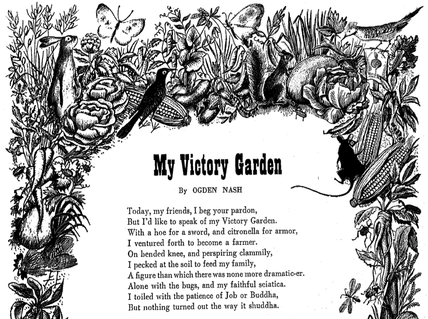
However, over the course of the summer I realized that I am definitely a first-year Victory Gardener. I ran out over-eager and over-ambitious -- especially in thinking I could keep up with the blog through the height of harvesting! Both bugs and rodents ate way more of our crops than their fair share (like our entire beet crop!), bacteria wilt got the cucumbers, weeds were more wild than ideal, and we definitely wasted seed when our stock accidentally baked out in a severe heat wave for five days -- and then wasted time and energy planting the dead seeds! In short, I became the twenty-first century embodiment of the World War II-era Department of Agriculture's  greatest fears. The USDA encouraged scorn and mockery of those underprepared and under-committed to the task.

"We all recall the over-eager gardeners of the last war [...who] rushed into the field with hardly any preparation for their heroic labors, beyond looking up Agriculture in the dictionary to see what it meant"
Robbins, Leonard Harman. “15,000,000 Victory Gardens,” New York Times Magazine, August 23, 1942. Pg. 15.
PictureAn unfortunately apt, if hyperbolic, excerpt. Ogden Nash, “My Victory Garden,” House & Garden, November 1943.
​Most amazingly, I wasn’t even a new gardener! I’ve been paid to work in gardens and farms in three different states, and spent four years of undergraduate volunteering 20 hours a week or more on the school garden, plus spent a childhood watching my father garden (with varying degrees of success!). I surely had more experience and/or expertise than many of the urban citizens of the United States in World War II.

​The problem could be that, try as I might, I just couldn’t make myself strictly follow all the instructions from World War II. Some were impractical (plowing 100 pounds of various additives into the soil), some were dangerous (applying arsenates to my food crops), and some were just . . .  more work than I was interested in (ergh, I know how to stake a tomato just fine!). I wasn’t great at following the instructions, or being a good, pliable pupil/gardener. But isn’t that what most Americans/people would do? Combine intuition with past experience with inspiration and take these instructions a healthy grain of salt? My failures may well be as instructive as my successes, I suspect (and hope).

Unfinished Business

​However, these are only tentative conclusions. The summer may be drawing to a close, but not the heat here at the top of the Delmarva Peninsula, and as my World War II materials remind me, the fall garden season is only just about to begin!!!
Picture
Ralph Sargent Bailey, “Plan Your Victory Garden for Three-Shift Production,” House Beautiful, February 1944.

An Update--Hoeing the Rows

5/19/2016


[Update available here: The Row Verdict.]

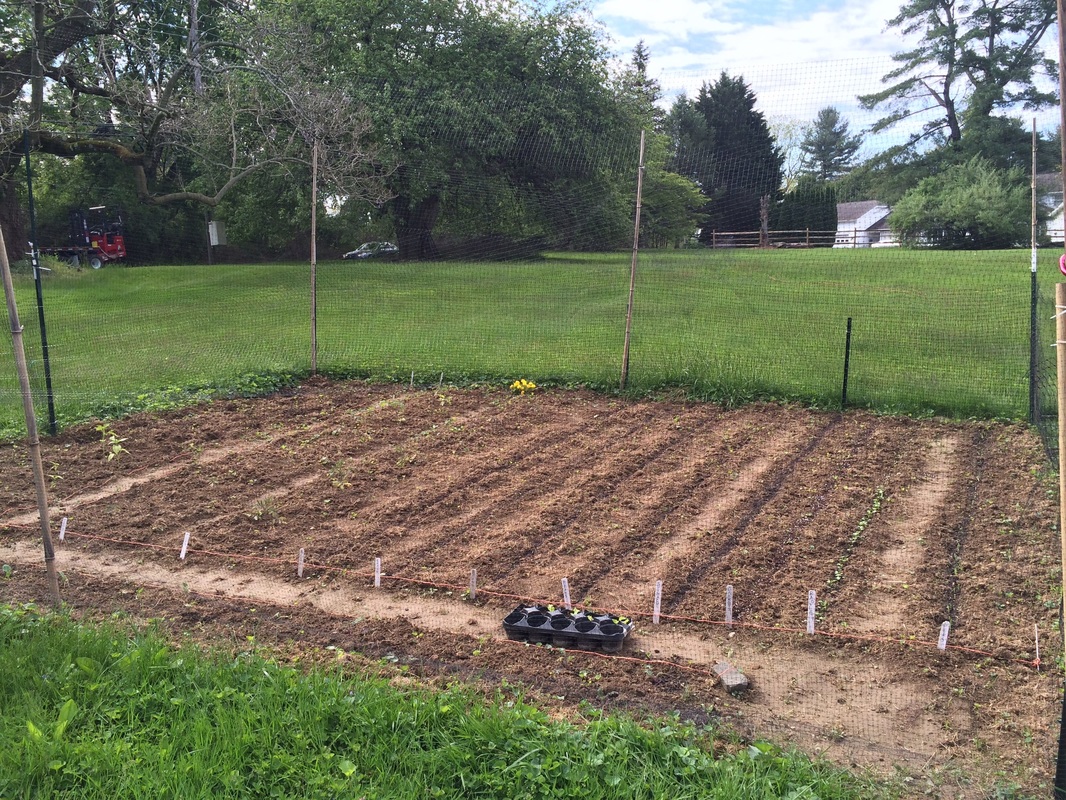
Well, with much delay and ado, the garden is finally all planted. Over the course of planting, we discovered that somewhere along the way the 20' by 20' square we had tried to stake out had turned into an 18' by 22.5' subtle rhombus, but we were able to improvise.  Around the space carved out for the Victory Garden proper, we filled in with corn, potatoes, broccoli, and a few peppers -- all plants left out of the Victory Garden plan we chose, but that appear in others. 
Picture
Taken from the North side, looking Southward on the garden.
​Without exception, every Victory Garden pamphlet suggests straight rows -- often even emphasizing that they should run lengthwise, rather than across the short side -- so rows it was. The primary reason for running rows lengthwise is that when using animals or machinery, as in large-scale agricultural operations, longer rows means fewer turns at the end of every row.

A particularly fortuitous feature of our garden plot is that  running our rows lengthwise also meant running the  rows North-South. This maximizes sunlight for growing plants, who then have equal access to Southern sun exposure. [If you live in the Northern Hemisphere, the directions that receive the most sunlight to least sunlight, in order, are: South, West, East, North.] Accordingly, we also oriented our plan so that the tallest plants (tomatoes) are to the East of the other rows, to keep them from shading out smaller neighbors like spinach or radishes. 
"Plant the garden in long straight rows far enough apart to cultivate with a team and a field cultivator. [...] A garden like this will give the largest returns with the smallest amount of hand labor."
-L.A. Hawkins, Make the Garden Pay (International Harvester Company, 1946).
Picture
Confession: I've never actually planted a garden in rows before. Yes, all the seed packets give directions for how many inches apart in a row seeds should be, and how far apart the rows, but I had always gardened in rectangular beds and patches before, rather than in single rows. Thus far, I have several concerns. I'm trying my hardest to be open minded and there's a chance I will be swayed over the course of this growing season, but here they are:
  1. The rows situation has already made accessing all the vegetables to plant seeds very difficult, since the plans from 1942 do not include room for footpaths (which would be ridiculously space inefficient). As it stands, we've been treading pretty close to our plant seeds, and likely compacting the soil much more than ideal pretty close to their roots.
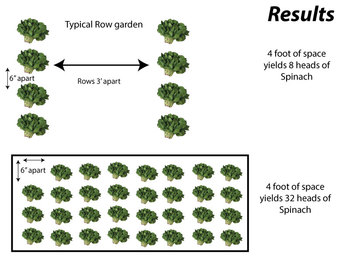
  2. When you plant only in a single row, you aren't planting as space-efficiently as you could be. {See picture to side.} This already profoundly bugs me, especially given the extreme rhetoric about the overarching importance of maximizing production.
  3. Weed control. When you plant in a bed style, the plants are close enough to provide a more or less complete canopy of leads above the soil. The labor of weeding comes down to almost zero once the plants start adding on leaves. With rows, there will always be expanses of space between the rows, just waiting for weeds to sprout up. This task has already begun, and is the largest time-suck in this period where all the rows are planted, but not all the plants need harvesting, suckering, or other tending yet.

Speaking of weed control ... the great unending task begins. Personally, I find weeding strangely satisfying and therapeutic. Next to actually eating the produce the garden, my favorite task is killing the myriad plants that pop up. And efficiency is my last concern. Standard garden advice is to simply use a hand cultivator (illustrated instructions here, courtesy midwestgardeningtips.com). However, I get really into the visceral pleasure of yanking plants by hand, individually and painstakingly. While using a hand-cultivator would take a mere fraction of the time, I almost always opt for hand-weeding ... and then spend an hour longer in the garden than I had planned on. (#worstvictorygardenerever.) Am I the only one who feels this way?

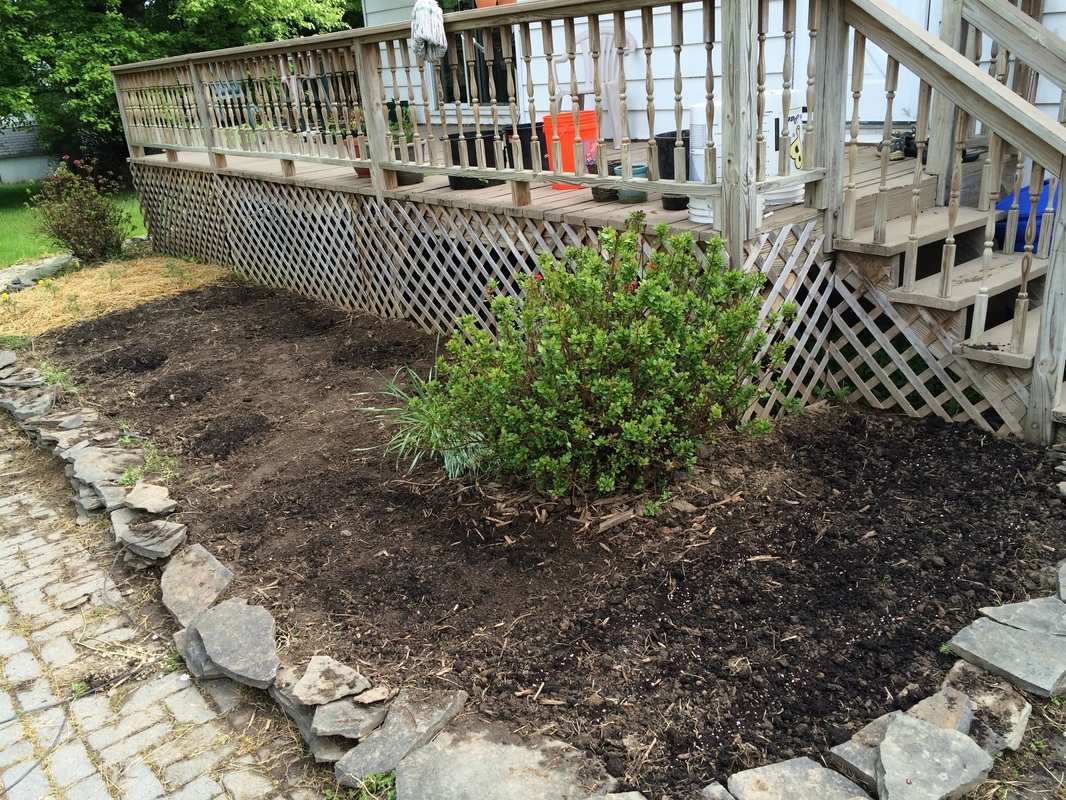
In closing, I just have to brag about the back bed off our porch. It's an additional project, where we'll be putting mostly sprawling squash vines. (I have yet to see such space-intensive plants recommended for World War II gardeners.) The bed was almost pure grass and weeds until my amazing partner put in many hours breaking it up while I was out of town last weekend.  I can't wait to post an 'after' picture at the end of the summer...

Picture

Names in Politics--From Schicklgruber to Drumpf

5/9/2016


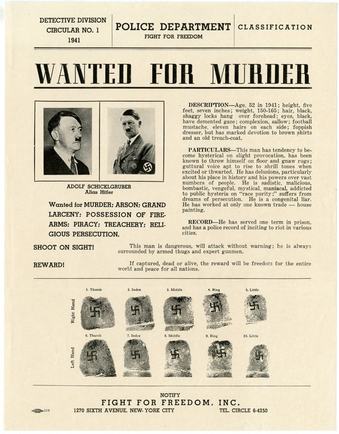
​Allow me to introduce you to Adolf Schicklgruber:

PictureCourtesy NY Historical Society's Pinterest.
Adolf may look familiar. During World War II, rather than refer to him exclusively as Herr Hitler, American often chose to refer to der Fuhrer as Adolf Schicklgruber. 

The origins of the popular practice went back to the interwar period in Europe, during Hitler's rise to prominence. Anti-Nazi Hungarian newspaperman Hans Habe first claimed that Hitler's real family name was Schicklgruber in 1935. Hitler was so concerned about this, as well as other myths stating that he might have Jewish ancestry, that he commissioned a formal investigation of his genealogy by Rudolf Koppensteiner, which became the 1937 book Die Ahnentafel des Fuehrers ("The Pedigree of the Leader").

In the U.S. in 1952, the less biased and less afraid-for-his-life scholar Alan Bullock  laid out Hitler's family story, debunking the claims that Hitler had actually been born Schicklegruber. There was a significant grain of truth in the popular myth: Adolf Hitler's father was born out of wedlock to a Maria Schicklgruber; her son (and Adolf's father) Alois bore the Schicklgruber name until the death of his purported father, Johann Hiedler. Midway through life, Alois changed his name legally to Hitler, the name he then passed on to his son. 

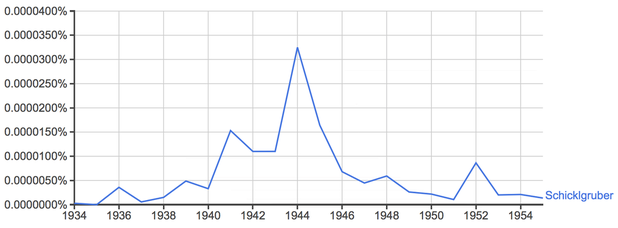
Google ngram is one tool available to give historical researchers one idea of the popularity of phrases, ideas, and terms; Google will search their entire archive of digitized historical materials, including books, newspapers, magazines, and other media, and track occurrences of any word, words, or phrases of your choice. As we can see below, the Schicklgruber story clearly starts around 1935; one early peak seems to be near the US entry into the war, with another in 1944. Interest in name-calling the German Furher then drops off until the myth is debunked in 1952, drawing it into the public eye briefly once more:

Picture
Word frequency of "Schicklegruber"

Donald Drumpf 

In case you somehow missed it, John Oliver launched an attack on presumptive Republican presidential nominee Donald Trump in late March very much in the Schicklgruber vein. Turns out, Donald Trump's family name was originally Drumpf, and was changed to Trump sometime during the American naturalization process. (Trump's ancestors were not only Drumpfs, but also immigrants!)

But really, if you haven't watched the segment yet, you should. Here's the whole bit, but the Drumpf name comes up starting around 18:40. Alternatively, you can just read the excerpt below:
If you are thinking of voting for Donald Trump, the charismatic guy promising to ‘Make America Great Again,’ stop and take a moment to imagine how you would feel if you just met a guy named Donald Drumpf: a litigious, serial liar with a string of broken business ventures and the support of a former Klan leader who he can’t decide whether or not to condemn. Would you think he would make a good president, or is the spell now somewhat broken?
John Oliver gets at the big questions here in his closing speech: why does a name matter? Is the importance of personal brand so much more important than substance that the most effective way to critique a political figure is to attack that brand?

What's In a Name?

Picturecourtesy www.donaldjdrumpf.com
Anyone who has read much American political history -- or even just skimmed the Lincoln-Douglas debates -- knows that political slurs are nothing new. [Lincoln called Douglas' argument "thin as the homeopathic soup that was made by boiling the shadow of a pigeon that had starved to death" during the Sixth Joint Debate.]

But it seems like there is something different about the use of family names, rather than descriptive labels and critiques, to smear political figures. On some level, we must not really believe that "a rose by any other name would smell as sweet," if we repeatedly hope that simply calling Hitler 'Schicklgruber' or  Trump 'Drumpf' can break the spell. It seems like if only the enemy can be properly named, the truth can be revealed and their power can be dissolved.

The more apt literary reference would be the Brothers Grim fairytale, Rumplestiltskin. In the tale, the title character is a magical little man who helps a country girl achieve all her dreams, but at an increasingly high price. Finally, he takes away her child and refuses to return it unless the now-queen discovers his true name. With the help of a spy, she discovers his name and correctly pronounces it:

"The devil told you that! The devil told you that!" shouted the little man, and with anger he stomped his right foot so hard into the ground that he fell in up to his waist. Then with both hands he took hold of his left foot and ripped himself up the middle in two.

The Historian in the Garden - An Explanation.

5/5/2016

 
'The Historian in the Garden' might seem a simple, self-evident title for this blog-venture -- and hopefully it is! I garden, I go out into my garden frequently, and I am a historian. I even occasionally write outside near my garden! However, I also chose it with a few other layers of meaning packed in, like I'd like to unpack here.

The Book

Picture
The book title I am playfully riffing on is that of Leo Marx's 1964 masterpiece, The Machine in the Garden: Technology and the Pastoral Ideal in America. [Pagination is from my copy, New York: Oxford University Press, 2000.] 

Leo Marx was an early scholar in American studies -- working from the basis of U.S. exceptionalism and looking to explain unique traits of the American experience and national character. This book was based on his 1950 dissertation in the History of American Civilization, completed at Harvard.

His source base is limited primarily to the literature produced by 'great' (read: white, male) authors of the American cannon. Washington Irving's Sleepy Hollow, The Tempest ('Shakespeare's American Fable'), the agrarian writings of Thomas Jefferson, the technological visions of Tench Cox, and bits of Emerson, Thoreau, Twain, Hawthorne, Melville, and many more appear.

Through these disparate authors, Marx identifies a unique and persistent trope: these authors, in grappling with the onset of American industrial power, locate a tension between nature and culture in the form of, well, a machine in the garden. In his own words:

[Throughout the American cannon,] the machine is made to appear with startling suddenness. [...] The ominous sounds of of machines, like the sound of the steamboat bearing down on the raft or of the train breaking in on the idyll at Walden, reverberate endlessly in our literature. (15-16) 
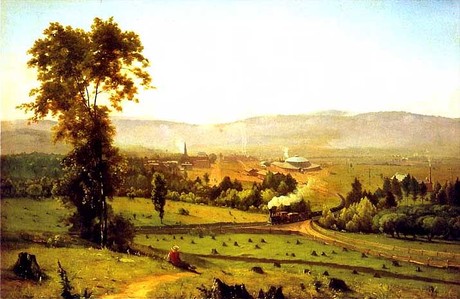
It is the intrusiveness of the new technology that is key for Marx. The most common machine intruding throughout American literature is a train -- hence the book cover image above. The train has long been recognized in its time and our own for breaking down and reorganizing traditional ideas about space and time. The train network is often famously credited with creating standardized time; Backstory Radio has an excellent podcast covering the completion of the trans-continental railroad as the first time Americans tried to experience an event simultaneously. While we thus often eulogize train network expansion as a unifying force in American history, Marx points out that such technological networks broke down old distinctions that helped us make sense of the world--especially the line between the city and the county.
​The distinctive attribute of the new order is its technological power, a power that does not remain confined to the traditional boundaries of the city. It is the centrifugal force that threatens to break down, one and for all, the conventional contrast between these two styles of life [pastoral and urban]. (32)
Picture
George Inness, 'Lackawanna Valley,' 1856, National Gallery of Art.
Marx ultimately concludes that the intrusion of the machine into the garden exposes the inadequacies of our traditional imagery to understand the modern American relationship between nature and culture. Why are American literary heroes always left broken by the intrusion of the machine in the garden? Is there truly a pastoral paradise left to intrude upon? Or has the train been there as long as we have?
These works manage to qualify, or call into question, or bring irony to bear against the illusion of peace and harmony in a green pasture. (25)  [...] To change the situation we require new symbols of possibility, and although the creation of those symbols is in some measure the responsibility of the artists, it is in greater measure the responsibility of society. (365)

The Garden

As I write my dissertation, I am working to figure out a few basic questions: what IS a garden? How can we define it? My brilliant advisor asked me this very question during my doctoral oral exams, and then as well as later, I have come to a list of ways that you cannot define a garden:
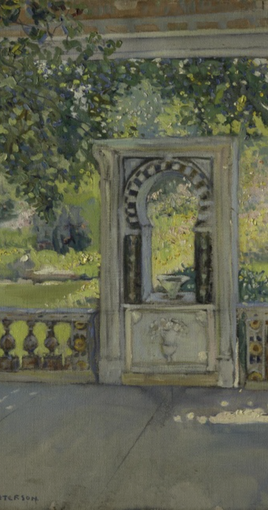
PictureDetail, Jane Peterson, 'Turkish Fountain with Garden,' ca. 1910, Metropolitan Museum of Art
  • Location -- It is tempting to state that a garden constitutes plants that are grown at or near the home, while agriculture is out in fields. How then, however, to explain public gardens? Botanical gardens? Community gardens? While certainly gardening and domesticity are entwined in certain times and places of American history, the connection is not definitive.
  • Function -- Gardens can be healing, as seen in the growing gardens for veterans movement, hospital gardens, and the growing field of horticultural therapy. Gardens can also be aesthetic and artistic places, as the American Impressionist painters conveyed in oils -- see The Pennsylvania Academy of Fine Arts online exhibit, The Artists' Garden.  Gardens can be public and educational, as the mission statement of the famed St. Louis Botanical Garden illustrates. Or they can be privately cultivated in food deserts where that may be the best way to ensure nutritional, fresh, meals for your family; such gardens grow social justice as well as vegetables. Some gardens, like Victory Gardens, are highly political and patriotic. However, there are no strict rules: gardens can serve multiple of these functions or other ones entirely.
  • Relationship to the market -- When thinking specifically about how to differentiate gardens from agriculture, an easy answer might seem to be that agriculture is done for a living, to produce commodities that sell on the market for profit, while gardens remain outside the commercial sphere. However, this doesn't hold either. What about public gardens who charge for admission? Or what about truck/market gardens? How about the ways that gardens play into domestic economy by saving money on food? They may not enter the marketplace, but they are still shaped in relation to it. 
Here is where Marx proves helpful. I assert that the garden is ultimately a construction--not only literary, but also social, cultural, and political. I think the reason I can find no strict definitions of what constitutes a garden, is that the social meaning of gardens and gardening is constantly changing, representing a unfixed middle ground between "wilderness" (whatever that means) and "civilization," nature and culture -- an Arcadia we constantly seek.  In this, I agree with Marx that symbols are important to our political and social self-fashioning. However, while I am thoroughly ready to abandon the trope of the machine in the garden, I remain convinced that the garden remains ever more relevant to the twenty-first century. 

As much as the garden is a construction, it is also, undeniably, a place. Gardens are material and real. They have plants, with roots in the soil and leaves angling for sunlight. One can sit there and think, and write. This summer, that is what I intend to do: a historian in her garden.

Picture
<<Previous
Forward>>

    Author

    Anastasia Day
    History-Phd-in-Progress. Writes about environment, food, people and how the past informs the present.   

    Tweets by @Anastasia_C_Day

    Archives

    July 2020
    June 2020
    April 2020
    September 2019
    July 2019
    September 2018
    August 2018
    June 2018
    May 2018
    April 2018
    February 2018
    January 2018
    September 2017
    July 2017
    May 2017
    March 2017
    February 2017
    January 2017
    November 2016
    October 2016
    September 2016
    August 2016
    May 2016
    April 2016

    Categories

    All
    Academia
    Archives
    Book Reviews
    Current Events
    Environmental History
    Everything Has A History
    Food Studies
    Pedagogy
    Victory Gardens

    RSS Feed

Proudly powered by Weebly