The Historian in the Garden
  • Home
  • About
  • C.V.
  • Contact

What You Need: Post-Election Resources

11/30/2016

 
Picture
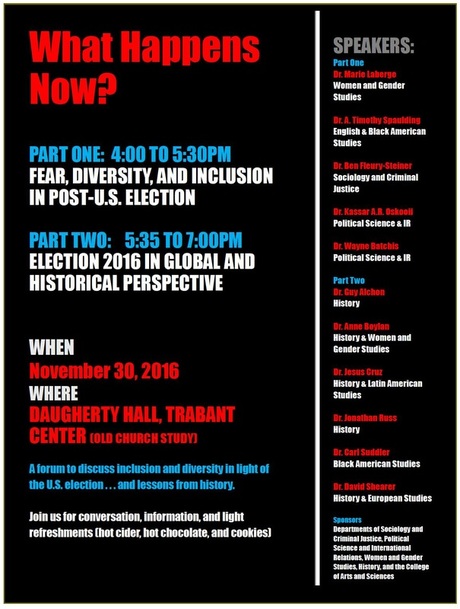
Today, I plan on attending a wonderful event here at the University of Delaware, co-sponsored by a variety of departments and featuring two flights of professors talking us through the election, and how to make sense of a post-election United States.

Education, I firmly believe, is my primary path forward from this election. I want to never stop learning, but I also want to teach, to engage in discussion, to contextualize, historicize, and yes, fact-check, even in this possibly post-truth world. 

So I was wondering what I could do to contribute to this great event. Together with a band of like-minded graduate students (namely, the inspiring Kiersten Mounce and the wonderful Elizabeth Jones-Minsinger), I got to work on a document we could distribute, full of information, further reading, links to charities and organizations, and ideas for exercising your active citizenship over the next four years. ​

Post-Election Resources:

The premise of this document is that there are basic tenets America’s constitution guarantees and/or that are in the best interest of all Americans:
  • Civil rights, liberty, and freedom for all. Civil rights includes environmental justice and fighting climate change.
  • Economic equality and prosperity for all
  • Protection of democracy and fighting corruption in politics
  • An informed citizenry as key to all of the above.
With the exception of climate change and the environment, all of these have been invoked by all sides of the U.S. political arena in the months leading up the election, even if different people meant different things while invoking them. These are issues that transcend party politics and provide common ground for all Americans to agree on -- regardless of whether you think political answers lie in big or small government, balanced budgets or increased spending, increased global humanitarian efforts, increased American isolationism, or increased American interventionism (or any combination of the above). This document represents a wide variety of causes that may be of varying personal importance to you;  if you feel motivated, we hope that at least one of the organizations, forms of action, or causes leaps out at you as worthy of your time and effort.

Click here to access the full document

Some starting points:
  • Invest in your community! Join nearby religious or faith groups that work toward causes you believe in; Support local businesses, woman-owned businesses, black- and minority-owned businesses; Join or start local chapters of national organizations; Volunteer at local charities (some listed later here), and get to know your neighbors -- ask them for sugar and give them those extra cookies you baked with it that you don’t even want and know you’ll just eat at 1AM if they sit in your kitchen overnight. Find out what your bank is doing with your money and move it to a different one (maybe a Credit Union!) if you don’t agree with their investments.
  • Investigate your carbon footprint and work to shrink it--reduce, recycle and reuse can be awesome. My favorite way to do this is: instead of buying corporate conglomerates’ beer, invest in a glass growler and fill it up with beer from local breweries. Ditto with investing in a gorgeous water bottle to replace plastic ones -- and a favorite coffee mug with lid that you get filled at coffee shops instead of paper cups. (There are often financial savings here: Saxby’s offers %10 off if you bring your own cup, and %15 off if you bring a Saxby’s reusable cup- many other coffee shops offer discounts too.)
  • Get together with friends, classmates, or organizations to offer to paint over any hateful graffiti that you might see or might be found in your neighborhood; beautify your home and connect with people at the same time. Or just make some public art on your own for yourself or as a local monument. Mark ground that is sacred to you and consecrate it with flowers, rocks, or other handy and meaningful markers. 
  • Check out Volunteer Match, a great way to find with nonprofits that need your help, time, and/or expertise. 
  • Take a moment to read the Southern Poverty Law Center's “Ten Ways to Fight Hate: A Community Response Guide” 
  • Or, read Yale Professor Timothy Snyder’s 20-point list of lessons from the 20th century to take into the 21st.
An Election-Day Call to Active Citizenship--Start by Voting

11/8/2016


Ethical Imperatives to Act

The other week, I reposted this genius tongue-in-cheek article from McSweeney's. It was wry-chuckle-out-loud funny, yes, but also touched on deeper problems I've been grappling with in this election:
"When My Grandkids Ask Me What I Did to Fight American Fascism, I'll Proudly Tell Them I Tweeted A Few Times"
The Greatest Generation stormed the beaches at Normandy, marching into unimaginable violence as they liberated a continent from tyranny. They rationed resources on the home-front to help the war effort. They came together as one, setting aside personal differences to save the world. They gave their lives so others could experience the freedom and liberty we so often take for granted. Just as they sacrificed, I wrote pithy remarks on the internet.
-- Sam Spero, for McSweeney's Internet Tendency, 
 
Of course, I'm a sucker for World War II references, and anything playing with the historical memory and self images of "The Greatest Generation" and "The Good War." However, I also knew that the bulk of my political activism since the primaries ended had indeed been through so-called internet 'slacktivism'; signing digital petitions, using social media to promote political analyses I agreed with,  but not really talking with anyone. No phone calls, no door-to-door, no street signs, t-shirts, marching, or real conversations with real people, except for relatives and friends. 

I had been raised by two wonderful parents who taught me that voting is a civic DUTY as well as a right -- and that in our household, you lost your right to complain if you declined to participate in effecting the outcome of an election. But is voting enough, I wondered this year? 

​The facts are clear. These are the two most unpopular presidential candidates in American history. Election anxiety is at incredibly high levels. More Americans than ever before are feeling trapped in broken political, economic, and social systems, unsure of the way out -- and often lashing out at minority scapegoats and villianizing opponents on either side of the aisle instead of looking for constructive solutions. So is voting on one day enough?

I found my answer on Facebook:
Picture
(click through for link to FB post)
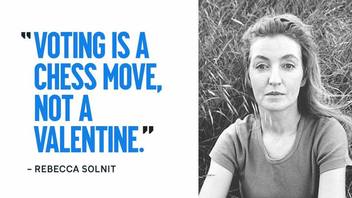
"Let's win this damn thing and win big and then wake up Wednesday prepared to fight, push prod a Clinton administration with grace, genius, and generosity for what we can wring from it, which is, I believe, a whole hell of a lot. It won't be easy, but it will be possible. And right now it's the only move on this messed-up locked up chessboard. So take it, please, and keep going. It's in our hands. "
​-- Rebecca Solnit
Active citizenship is more than voting -- but voting is an excellent, and crucial, first step in exercising your active citizenship. I went to the polls this morning determined to aim for a higher baseline of political participation going forward -- and found a way for me to be involved in a national issue right on UD campus just next  week (#noDAPL).

Democracy Is Not Yet Completely Broken:

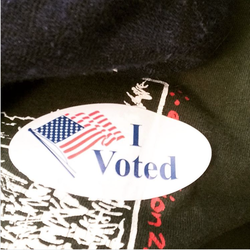
PictureI don't do selfies, I'm bad with a smartphone. Still proud I voted, dammit.
In the worrisome election of my life I took a moment to find some things to be grateful for, and I hope you can too:
  • TWO women running for president this year on my ballot
  • More viable down-ballot third party candidates than last time I was at the polls (read up on yours to assess viability yourself at Ballotpedia)
  • helpful, patient, efficient election workers helping me vote
  • long lines of active citizens and participants in our democracy
  • polite and supportive volunteers campaigning for down ballot candidates at legal distances from the polls, thanking everyone for voting, even if wearing stickers for the other candidate.
If only everyone had such an easy and pleasant experience exercising their constitutional right to vote, I could almost be optimistic today....

It All Starts with the Right to Vote:

The only hiccup in my voting experience was that upon entering my polling place, I was asked:
            "What development do you live in"? 
When I answered that -shockingly for my district!- I did not live in a development, I had to seek extra help to figure out which table to check in at. The wealthy developments that are so predominant in my area unfortunately probably have something to do with how very pleasant, efficient, un-threatening, convenient, and accessible my voting experience was.

This is not the case across the nation. The American Civil Liberties Union has an excellent breakdown on how the 30 states that enforce government-issued photo voter ID laws disproportionately keep 
low-income, racial and ethnic minorities, and the elderly from being able to vote. While my neighboring state of Pennsylvania does have a set of guidelines against voter intimidation, the fact remains that legally almost anyone can challenge a voter's identity at the polls and thus prevent or delay them from voting. Meanwhile, North Carolina leads the nation in ever-more innovative ways to affect voter turnout along racial and class lines; this is not interpretation, but rather summary from multiple judges presiding over lawsuits against the state. Polling places in minority neighborhoods are shrinking in number, especially across the South, according to Reuters. Voting is incredibly difficult, costly, and inconvenient for an INCREASING number of Americans. This is not democracy.

Please, please PLEASE vote for candidates that will work their hardest to assure voting rights for EVERYONE. In such terrifying times, this is a perfectly valid issue to be a single-issue voter for.

Your Voting Rights and Vital Information:

  • Bring identification even if it is not required, if you have it. 
  • If you are in line before a polling station closes, they MUST let you vote, no matter how long the line is. DO NOT leave.
  • If any question remains about whether or not you are legally registered and capable of voting, you still have the right to vote by provisional ballot. All polling places have provisional ballots on hand.
  • Know what constitutes misconduct at your polls
  • You can always call any number of voting hotlines if you see misconduct or experience trouble voting.
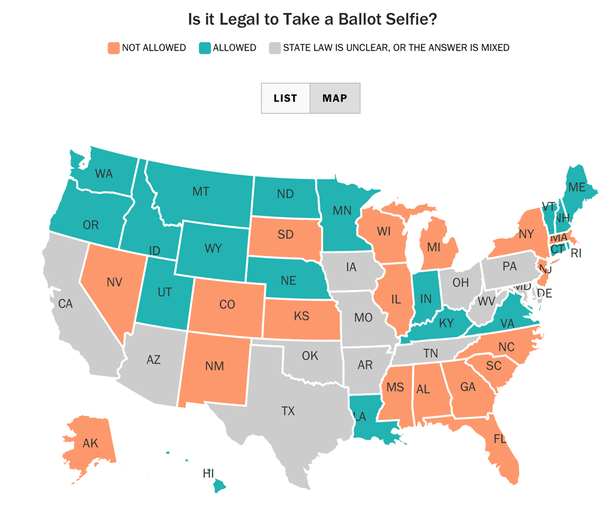
  • Find out if you can legally take a ballot selfies before you do so!
​
Picture
Thanks to Time Magazine; image links to full article.

Now Get Out There!

    Author

    Anastasia Day
    History-Phd-in-Progress. Writes about environment, food, people and how the past informs the present.   

    Tweets by @Anastasia_C_Day

    Archives

    July 2020
    June 2020
    April 2020
    September 2019
    July 2019
    September 2018
    August 2018
    June 2018
    May 2018
    April 2018
    February 2018
    January 2018
    September 2017
    July 2017
    May 2017
    March 2017
    February 2017
    January 2017
    November 2016
    October 2016
    September 2016
    August 2016
    May 2016
    April 2016

    Categories

    All
    Academia
    Archives
    Book Reviews
    Current Events
    Environmental History
    Everything Has A History
    Food Studies
    Pedagogy
    Victory Gardens

    RSS Feed

Proudly powered by Weebly