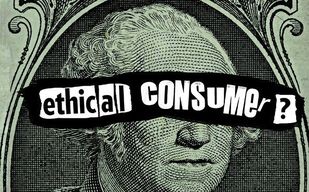
I cried a lot my first semester of graduate school. Some of my tears were from rewatching emotional episodes of Scrubs, some were from loneliness, some were from imposter syndrome, and some were because I actually was significantly underprepared for certain elements of graduate school. Among the most bitter tears were those that made me question my commitment to history as a discipline, my belief in understanding the past as a way of shaping a better future.
My first semester of graduate school, I took a (wonderful, incredible, amazing) course entitled Cultures of Consumption. Over the semester, I learned in greater depth than ever before how every single purchase I made that enabled me to live, to get to campus, to complete my coursework, to stay warm and fed and clothed, all contributed to deep social, economic, and political inequities.
I bought organic produce when I thought I could afford it . . . but not always.
I avoided animal products when I could . . . but eggs were such a cheap, easy, and delicious form of protein.
I still bought avocados from across the globe when they went on sale.
I still purchased breads and pasta undoubtedly full of GMO monoculture crops harvested with machines bought with the help of government subsidies that help kill family farms and dependent on an underclass of migrant labor. There were better purchasing choices available to me that I did not always take advantage of.
Here I was, a ludicrous exaggeration of the informed citizen. I had a boatload of privileges that enabled me to get to graduate school, to accrue knowledge and think critically, and still I found I could not implement basic changes in my lifestyle based on my historical knowledge. What hope could I have for an America full of people with less privilege, fewer choices, and more constraints? Could it be that education is not enough, that in fact, more knowledge could make *no difference at all* in people's actions?
My first semester of graduate school, I took a (wonderful, incredible, amazing) course entitled Cultures of Consumption. Over the semester, I learned in greater depth than ever before how every single purchase I made that enabled me to live, to get to campus, to complete my coursework, to stay warm and fed and clothed, all contributed to deep social, economic, and political inequities.
I bought organic produce when I thought I could afford it . . . but not always.
I avoided animal products when I could . . . but eggs were such a cheap, easy, and delicious form of protein.
I still bought avocados from across the globe when they went on sale.
I still purchased breads and pasta undoubtedly full of GMO monoculture crops harvested with machines bought with the help of government subsidies that help kill family farms and dependent on an underclass of migrant labor. There were better purchasing choices available to me that I did not always take advantage of.
Here I was, a ludicrous exaggeration of the informed citizen. I had a boatload of privileges that enabled me to get to graduate school, to accrue knowledge and think critically, and still I found I could not implement basic changes in my lifestyle based on my historical knowledge. What hope could I have for an America full of people with less privilege, fewer choices, and more constraints? Could it be that education is not enough, that in fact, more knowledge could make *no difference at all* in people's actions?

I've come a long way.
I'm still not a perfectly ethical consumer.
However, today, in the age of Trump, I have more faith than ever in the power of history. I've come to understand that it's not always the little things we do to get through the day that show history's grip on us, but the bigger arc of our lives, values, and (yes) our votes.
I've spent a lot less time judging myself and others. Relying on small, individual actions to save the world in the vein of 50 Ways To Help the Planet is great for the daily conscience, but more fundamental personal reorientations and systemic solutions are required. Virtue-signaling cannot save the world.
I've spent more time listening. The truth is, history does inform daily lives and actions. 99% of the time, when you listen to pundits, or even everyday people, the arguments they make about society, economics, and politics ARE a historical argument.
I'm still not a perfectly ethical consumer.
However, today, in the age of Trump, I have more faith than ever in the power of history. I've come to understand that it's not always the little things we do to get through the day that show history's grip on us, but the bigger arc of our lives, values, and (yes) our votes.
I've spent a lot less time judging myself and others. Relying on small, individual actions to save the world in the vein of 50 Ways To Help the Planet is great for the daily conscience, but more fundamental personal reorientations and systemic solutions are required. Virtue-signaling cannot save the world.
I've spent more time listening. The truth is, history does inform daily lives and actions. 99% of the time, when you listen to pundits, or even everyday people, the arguments they make about society, economics, and politics ARE a historical argument.
One short example:Barack Obama, April 2005: "Just think about what the world was like only fifty years ago, when the College of Agriculture was a small, five-man department that taught its students in a few old army barracks. Back then, the big challenge was navigating the soils found in the hills and valleys of southern Illinois. If you could master that, you were ready to graduate and live the farming life, knowing that it would be enough to provide for you and your family. And even if you didn't go to a fine school like [Southern Illinois University], in those days you still had a shot at the American Dream. Because whether it was on the farm or in a factory, a middle-class job that paid a decent wage and good benefits was easy to come by - and it would probably last you a lifetime. Hard work and sacrifice paid off for most families, and because of the wealth they built, America's economic leadership was unchallenged." | Donald Trump, January 2018: "We know that our nation was founded by farmers. Our independence was won by farmers. Our continent was tamed by farmers. So true. Our armies have been fed by farmers and made of farmers. And throughout our history, farmers have always, always, always led the way. Are you surprised to hear that, farmers? I don’t think so. (Applause.) You have led the way. Great people. The men and women in this room come from different backgrounds and from all across our land, but each of you carries the same title that’s been proudly borne by patriots and pioneers, inventors and entrepreneurs, the title of — very proudly — American farmer. Thank you very much. (Applause.) You embody the values of hard work, grit, self-reliance and sheer determination we need to — did you ever hear this expression? — make America great again. " |
Both Donald Trump and Barack Obama's visions of the agricultural past include references to the hard work of farmers as virtuous, and tie this labor to a mythical golden era in the past -- in Obama's case, when "you still had a shot at the American Dream" and in Trump's case, when America was "great." The farmers revolt of the Populist Era, the centuries of slavery on American farms, the decades of share-cropping, and the fact that most agricultural labor in the twentieth century has not been done by 'farmers' but by migrant labor would complicate both of their histories.
Both Obama and Trump also highlight the conflict between the landscape and the farmer: Trump claims farmers "tamed" the continent, while Obama presents the landscape as a "challenge" overcome with education at a College of Agriculture. What would it mean for each of their viewpoints on the future of farming to acknowledge that the federal government has been the largest driving force behind expansion of farmland throughout American history, through subsidies of irrigation, railroads, and crops? As September 2018 nears, when most parts of the 2014 Farm Bill will expire, historical opinions about the direction of our new Farm Bill are sure to fill the news.
Both Obama and Trump also highlight the conflict between the landscape and the farmer: Trump claims farmers "tamed" the continent, while Obama presents the landscape as a "challenge" overcome with education at a College of Agriculture. What would it mean for each of their viewpoints on the future of farming to acknowledge that the federal government has been the largest driving force behind expansion of farmland throughout American history, through subsidies of irrigation, railroads, and crops? As September 2018 nears, when most parts of the 2014 Farm Bill will expire, historical opinions about the direction of our new Farm Bill are sure to fill the news.

In Short-
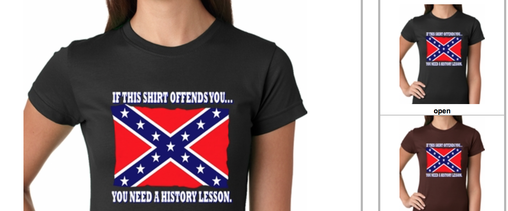
Too often, along both sides of the aisle and many points along many political spectrums, the histories people cling to are fictitious, invented, and purely self-serving. Nonetheless, I take comfort that this betrays a fundamental truth: people find history important and validating. Everyday Americans consider history essential evidence in constructing their self-image and identities, whether they realize it consciously or not.
Even if they are using history for hateful ends.
Even if they aren't engaging with historical facts.
Even when it seems like history is some great game of madlibs where you get to insert your own values to see the story you want to see.
But I see this as an opening--one that I have the privilege to be able to wedge further open, because I present as a non-threatening, educated, middle-class white person (even if I am steamrolled by mansplainers from time to time).
History does matter to people. This helps keep me writing, researching, talking about history, and believing that the work I do everyday matters. This is one reason why I am a historian.
Even if they are using history for hateful ends.
Even if they aren't engaging with historical facts.
Even when it seems like history is some great game of madlibs where you get to insert your own values to see the story you want to see.
But I see this as an opening--one that I have the privilege to be able to wedge further open, because I present as a non-threatening, educated, middle-class white person (even if I am steamrolled by mansplainers from time to time).
History does matter to people. This helps keep me writing, researching, talking about history, and believing that the work I do everyday matters. This is one reason why I am a historian.
 RSS Feed